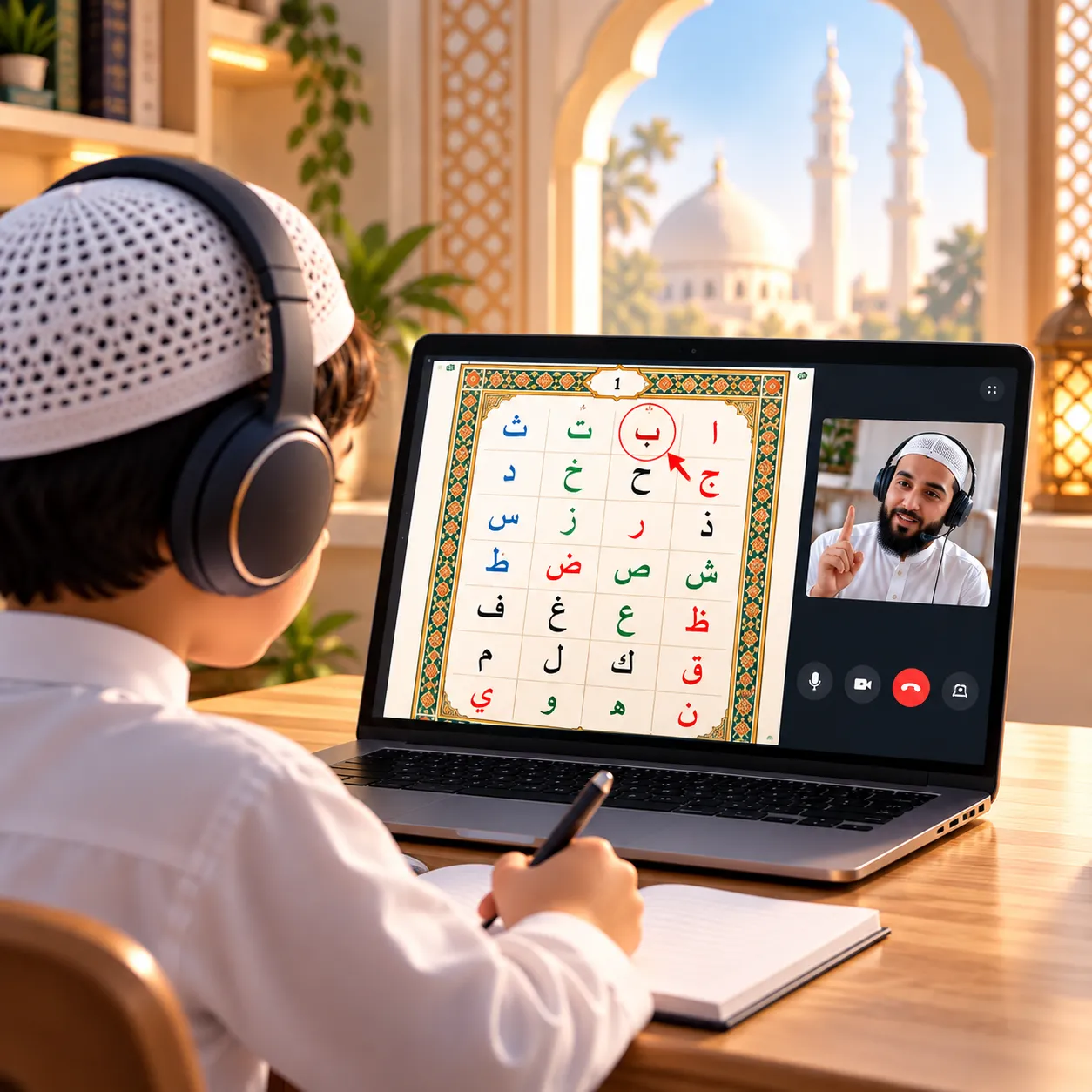
Learn how to start learning the Quran online with this beginner's guide covering Noorani Qaida, Quran reading, Tajweed and practical learning tips.
Can You Learn the Quran Online as a Complete Beginner?
Yes. You can learn Quran online even if you have never studied Quran reading before. Beginners commonly start by recognising Arabic letters, practising their sounds, and learning how letters connect. From there, they build the skills to read words and, step by step, Quranic verses.
You do not need to speak Arabic to begin learning to read the Quran. The starting point depends on what you already know: a learner who recognises letters may be ready for connected reading, while someone starting from scratch may benefit from a foundation course such as Noorani Qaida. A teacher can help assess your level and suggest a suitable next step.
Online Quran classes for beginners can provide live guidance from home, including opportunities to read aloud, listen to examples, ask questions, and receive feedback. Learners do not all progress at the same pace, so lessons should respond to individual ability rather than follow a fixed timeline.
Parents supporting a child’s learning may also find our guide to online Quran classes for kids helpful.
What Do You Need to Start Learning the Quran Online?
Getting started does not require specialised equipment. A few practical preparations can help you hear the teacher clearly and concentrate during online Quran lessons.
- A computer, tablet, or smartphone with a working camera and microphone.
- A stable internet connection and headphones or another clear audio setup.
- A quiet, comfortable place where you can listen and practise aloud.
- Access to the online communication platform chosen for the class.
- A regular lesson time that fits your daily routine.
- A Quran or other learning materials recommended by your teacher.
Step-by-Step Guide to Learning the Quran Online
A clear learning path helps beginners know what to practise first and how each skill supports the next. Your teacher may adjust the sequence to your current reading ability, but these stages offer a useful overview.
Step 1: Start with Noorani Qaida
For a learner who is new to Arabic reading, Noorani Qaida is a common structured starting point. It introduces Arabic letters and their sounds, including how a letter’s written form can change depending on where it appears in a word.
Learners then practise joining letters and recognising basic vowel marks and other reading signs. These foundations help make the move from isolated letters to reading Arabic words more understandable. If you already read Arabic, a teacher can assess your skills instead of asking you to repeat material you know.
Step 2: Learn Basic Quran Reading
After learning foundational reading rules, students apply them to Quranic words and verses. In Quran reading and recitation lessons, a teacher can listen as you read, help you work through unfamiliar words, and correct mistakes as they arise.
Fluency develops gradually through guided practice. Focus first on reading carefully and applying what you have learned; speed is not a useful substitute for accurate reading. Short passages and manageable practice goals can make it easier to notice progress and identify what still needs attention.
Step 3: Develop Correct Pronunciation
Arabic contains sounds that may be unfamiliar to learners whose first language is different. Makharij means the points from which letters are articulated in the mouth or throat. Learning where and how a sound is formed can help distinguish letters that may otherwise seem similar.
Listen to a clear example, repeat it, and ask a knowledgeable teacher to listen to your recitation. Feedback helps identify pronunciation habits that may be difficult to notice on your own. Take one sound or correction at a time and practise it in words and passages.
Step 4: Learn the Rules of Tajweed
Tajweed is the knowledge of rules that guide proper Quran recitation, including clear pronunciation and how sounds are read in context. Learning these principles can help readers recite with greater care.
A beginner does not need to learn every rule at once. Start with foundational guidance relevant to your reading level, listen to examples, then practise applying the rules while reciting. A teacher can help you decide what to focus on next, so learning Quran with Tajweed online remains manageable and connected to actual reading.
Step 5: Practise and Revise Regularly
Returning to earlier lessons helps reinforce letters, reading signs, pronunciation, and rules you have already studied. Set aside realistic practice time, repeat difficult words, listen carefully to your teacher’s examples, and note recurring questions to discuss in the next class.
A steady routine is generally easier to maintain than occasional long practice sessions. If there are gaps between lessons, briefly review previous material before moving to something new. Be patient with mistakes: they are useful signals about what to practise, not a reason to give up.
Step 6: Continue Learning According to Your Goals
Once you have a foundation, you can choose further study based on your interests and current ability. Some learners focus on improving recitation; others may want to memorise selected passages, study meanings, or learn broader Islamic subjects. These are options, not a required sequence that every learner must complete.
- Quran Memorization (Hifz) for learners whose goals include memorization.
- Quran Tafseer for learners interested in explanations and meanings of Quranic verses.
- Islamic Studies for learners seeking broader Islamic learning.
Which Quran Course Should a Beginner Choose?
The right course depends on your current skills and what you want to learn. You do not need to enrol in every subject at once; start with the option that meets your immediate learning need.
Noorani Qaida
A suitable starting option for learners who need to practise Arabic letters, pronunciation, and foundational reading skills. See the online Noorani Qaida course.
Quran Reading and Recitation
For learners who are developing the ability to read the Holy Quran and want guided practice with words, verses, and fluency. Explore Quran Recitation.
Tajweed
For readers who want to understand and apply rules that guide careful Quran recitation. Learn more about Quran Reading with Tajweed.
Quran Memorization (Hifz)
For learners interested in memorizing the Quran or selected portions with an approach that includes revision. Explore Quran Memorization.
Quran Tafseer
For learners interested in studying explanations and meanings of Quranic verses. See the Quran Tafseer course.
Islamic Studies
For learners who want to explore broader Islamic knowledge and education. Learn about Islamic Studies.
If you are unsure where to begin, describe your experience and goals to a teacher and ask for a recommendation based on your current level.
Why Choose One-to-One Online Quran Classes?
One-to-one lessons give a teacher time to listen to one learner’s reading and respond to their questions, pace, and pronunciation. This can be helpful when you want direct feedback or need a lesson adjusted to particular areas of difficulty.
Individual lessons may also make it easier to ask questions and review a point before moving on. However, group classes can suit learners who prefer studying with others or benefit from shared activities. Consider the class format, teacher interaction, and learner’s comfort when choosing.
Can Adults Learn the Quran Online?
Yes. Adults can begin Quran learning from the basics, strengthen letter recognition, work on reading, or return to lessons after a long break. Previous experience is useful context for a teacher, but it is not a requirement for someone starting from scratch.
You can explain what you already know and what you hope to learn, whether that is clearer pronunciation, reading practice, or Tajweed. Lessons can then begin at an appropriate level. Flexible online classes may also help adults fit study around work or family commitments, depending on the available schedule.
There is no need to feel embarrassed about asking basic questions or revisiting foundations. Every learner has a different starting point.
If you are comparing options, read our guide on how to choose the right online Quran academy for advice on teachers, courses, and class arrangements.
How to Build a Consistent Quran Learning Routine
A routine should support learning without becoming an unrealistic burden. Start with a clear, modest goal, choose a regular lesson time where possible, and set aside time to revisit what the teacher covered.
Practise pronunciation aloud, write down questions, and ask your teacher for guidance when a sound or rule is unclear. Avoid leaving unnecessary gaps if a regular schedule is possible, and review your progress from time to time so practice stays connected to your goals.
If motivation dips, return to a manageable task rather than trying to make up everything at once. Consistency and patience can help you build a lasting habit; progress will vary with prior knowledge, practice, lesson frequency, and individual learning needs.
Common Mistakes Beginners Should Avoid
Beginning with the right expectations can make Quran learning more comfortable. These common difficulties are manageable when you treat them as reminders to slow down, ask for support, or adjust your routine.
- Skipping foundations: build on the letters and reading signs you need before tackling material that feels unclear.
- Practising pronunciation without guidance: use a teacher’s listening and feedback to catch sounds that are hard to assess yourself.
- Rushing through lessons: focus on understanding and accurate practice rather than covering material quickly.
- Ignoring revision: revisit previous lessons so new learning does not replace time spent strengthening earlier skills.
- Practising inconsistently: choose a realistic pattern you can maintain instead of an ambitious schedule that is difficult to follow.
- Taking on advanced Tajweed too soon: learn foundational rules first and add more when your teacher advises.
- Feeling discouraged by early mistakes: note what needs work, ask questions, and treat corrections as part of learning.
Frequently Asked Questions
A welcoming place to begin
Start Your Quran Learning Journey with the Right Guidance
Dirasat-ul-Quran Online Academy offers personalized one-to-one online Quran classes for children and adults. Explore the available courses to find a suitable starting point for your goals. You can also try 3 Days of Free Demo Classes and discuss a suitable starting point.
Book 3 Days of Free Demo Classes